Mobile Class IV laser therapy for cats
Gentle laser therapy for cats at homeHelp support your cat’s comfort, movement and recovery with Class IV laser therapy delivered at home by an experienced Registered Veterinary Nurse. Calm, unhurried appointments mean your cat can be treated in familiar surroundings without the added stress of travelling to a clinic.
What is laser therapy for cats?

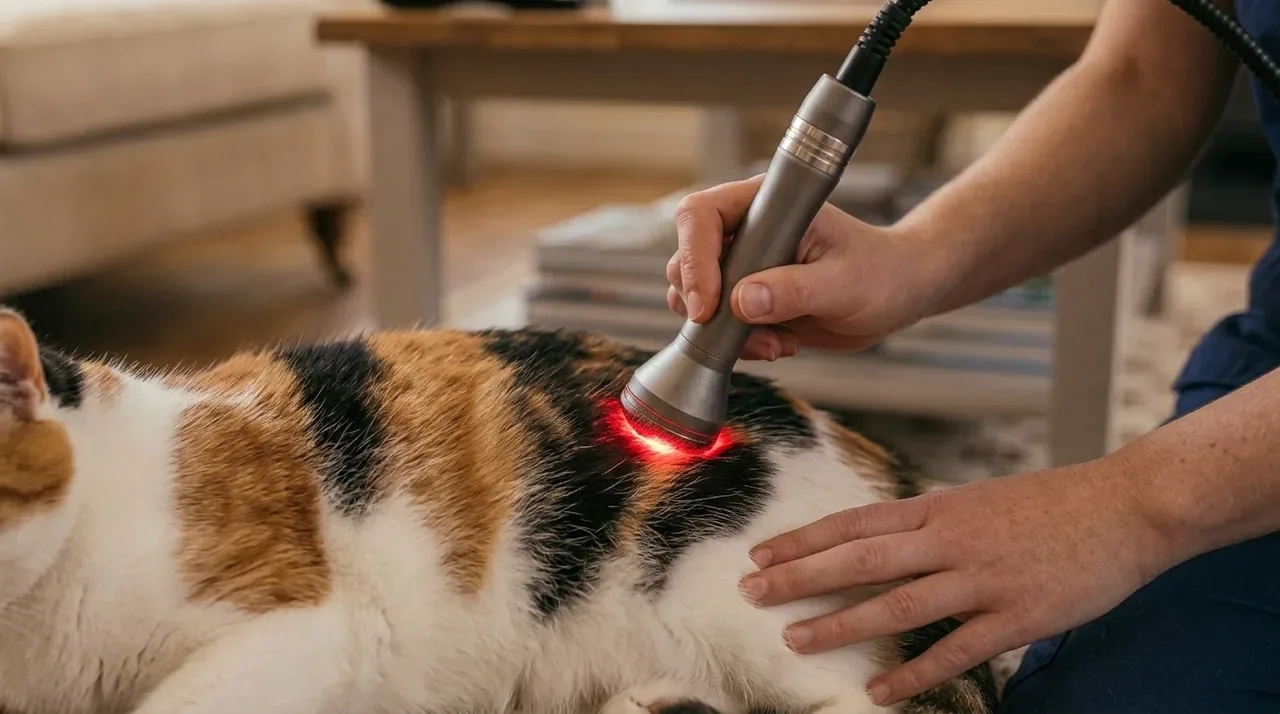
Laser therapy for cats uses carefully controlled therapeutic light to support natural tissue repair, circulation and recovery. A handheld Class IV laser is moved gently over the treatment area while your cat remains awake, without needles, sedation or invasive procedures.
Treatment can support a wider veterinary or rehabilitation plan for joint, muscle and soft-tissue problems. Sessions are tailored to your cat’s condition, mobility, temperament and veterinary history, with home visits helping older, nervous or less mobile cats stay relaxed in familiar surroundings.
When laser therapy may help cats

Cats are very good at hiding discomfort, so signs such as reduced jumping, changes in grooming or lower activity levels can be easy to miss. Laser therapy may form part of a wider care or rehabilitation plan to support comfort, mobility and tissue recovery, particularly for older cats, those recovering from injury or surgery, or cats managing longer-term joint and soft-tissue problems.
Laser therapy for cats may be considered for:
- Arthritis, stiffness and reduced mobility
- Joint, muscle and soft-tissue discomfort
- Recovery following injury or surgery
- Slow-healing wounds and local inflammation
- Older or less active cats needing mobility support
- Nervous cats who benefit from treatment at home
Home visits can make treatment easier for cats

For many cats, the most stressful part of an appointment is the carrier, car journey and unfamiliar environment. Our mobile Class IV laser therapy service brings treatment to your home, giving your cat time to settle in familiar surroundings with minimal handling.
Appointments are carried out by Registered Veterinary Nurses with relevant physiotherapy training and certification. We work at your cat’s pace and adapt each session around their comfort, mobility, veterinary history and any guidance from their veterinary team, so treatment fits naturally alongside their wider care or rehabilitation plan.
Local cat visits may include Stourbridge, Kingswinford, Dudley, Wall Heath, Kinver, Brierley Hill, Halesowen, Oldbury and nearby West Midlands locations.Cat laser therapy FAQs
Is laser therapy stressful for cats?
The aim is to make each session as calm and low-pressure as possible. Laser therapy itself is non-invasive, and many cats tolerate it well when they are given time to settle and are not rushed.
For cats who dislike travelling or become anxious in a veterinary clinic, being treated at home can make a significant difference. They can stay in familiar surroundings, with familiar smells and people nearby, which often makes the whole appointment easier.
Does laser therapy hurt cats?
Laser therapy should not be painful. Your cat may feel a gentle warmth over the area being treated, but there are no needles, injections or invasive procedures involved.
We monitor your cat closely throughout the session and pay particular attention to their body language. If they become uncomfortable or unsettled, treatment can be adjusted, paused or stopped.
Will my cat need to be shaved?
Clipping is not normally required for routine laser therapy. The laser can usually be applied through the coat, although the way treatment is delivered may vary depending on the area being treated and your cat’s individual needs.
If there is a specific reason why clipping would be helpful, this would be discussed beforehand rather than done as a matter of routine.
How do I know if my cat is in discomfort?
Cats often hide pain or stiffness very well, so the signs can be much less obvious than they are in dogs. Changes may include jumping less, hesitating before using stairs, reduced grooming, sleeping in different places, becoming less active or appearing reluctant to be touched.
You may also notice subtle behavioural changes such as hiding more often, becoming irritable or changing the way they use their litter tray.
Any new or unexplained change should be discussed with your vet first so the underlying cause can be assessed.
How many laser therapy sessions will my cat need?
There is no fixed number of sessions that suits every cat. The frequency and duration of treatment will depend on what is being treated, how long the problem has been present, your cat’s general health and how they respond to therapy.
A cat recovering from an injury or operation may need treatment for a relatively short period, while an older cat with arthritis or another ongoing condition may benefit from an initial course followed by occasional maintenance sessions.
Progress can be reviewed throughout treatment so the plan can be adapted as your cat’s needs change.
Can laser therapy be used alongside my cat’s veterinary treatment?
Yes. Laser therapy is generally considered as part of a wider care plan rather than a replacement for veterinary treatment, prescribed medication or rehabilitation.
If your cat already has a diagnosed condition or is recovering from surgery, their veterinary history and any existing recommendations will be taken into account before treatment begins.
Where veterinary approval or further information is needed, this can be discussed with you before arranging therapy.
Is laser therapy suitable for older cats?
Older cats may be particularly suited to home-based laser therapy when arthritis, stiffness or reduced mobility is making everyday movement more difficult.
As cats age, you may notice them jumping onto lower surfaces, using furniture differently or becoming less active rather than showing obvious signs of pain. Supporting comfort and mobility can therefore be an important part of helping them continue their normal routines.
Suitability will still depend on your cat’s overall health and medical history, so treatment is always considered on an individual basis.
What happens during a laser therapy appointment?
At the start of the appointment, your cat will be given time to settle and become comfortable with our presence. There is no need to rush them straight into treatment.
The Class IV laser is then applied using a handheld treatment head which is moved over the relevant area according to the treatment being provided. Your cat can usually remain in a comfortable position rather than having to be restrained in a rigid clinical pose.
We keep handling to a minimum and adjust the session around your cat’s tolerance, temperament and body language.
How quickly will I notice a difference?
Every cat responds differently. Some owners may notice changes in movement, activity or comfort relatively early in a course of treatment, while for others the improvement can be more gradual.
The underlying condition also plays an important role. A cat recovering from surgery, for example, has different needs from an older cat with long-term arthritis.
Rather than relying on a single session, we look at changes over time such as jumping, grooming, general movement, comfort and normal day-to-day behaviour.
Talk to us about your pet
If you would like to know whether mobile Class IV laser therapy may be suitable for your pet, send a few details and we’ll come back to you with the next best step.
Contact details
info@petlasertherapy.co.ukOpening times
- Mon-Fri
- 9-8pm
- Saturday
- 9-5pm
- Sunday
- Closed